
2 min read
How Many Cameras Does a Video Podcast Need?
One, two or three cameras: what each setup gives you on screen, and why live switching saves time in the edit.
The number of cameras decides how your show looks and how long it takes to edit. Here is what each setup gives you.
One camera
A single wide shot of everyone at the table. It is simple and works for a solo show, but with two or more people the viewer never sees faces up close, and long episodes start to feel static.
Two cameras
Usually a wide shot plus a close shot, or one close shot per person for a two-person show. The edit can cut to whoever is speaking, which already feels like a real show.
Three cameras
The standard for a two-person interview: a close shot of each person and a wide shot of both. Every reaction is covered, cuts feel natural, and Shorts can be built from close shots that crop well to vertical.
Live switching vs editing angles later
With live switching, a technician cuts between cameras during the recording, so you leave with a finished multi-camera episode. Without it, an editor has to sync and cut every angle afterwards, which takes hours per episode.
What matters as much as cameras
- Lighting. Good light makes an average camera look great; bad light ruins a cinema camera.
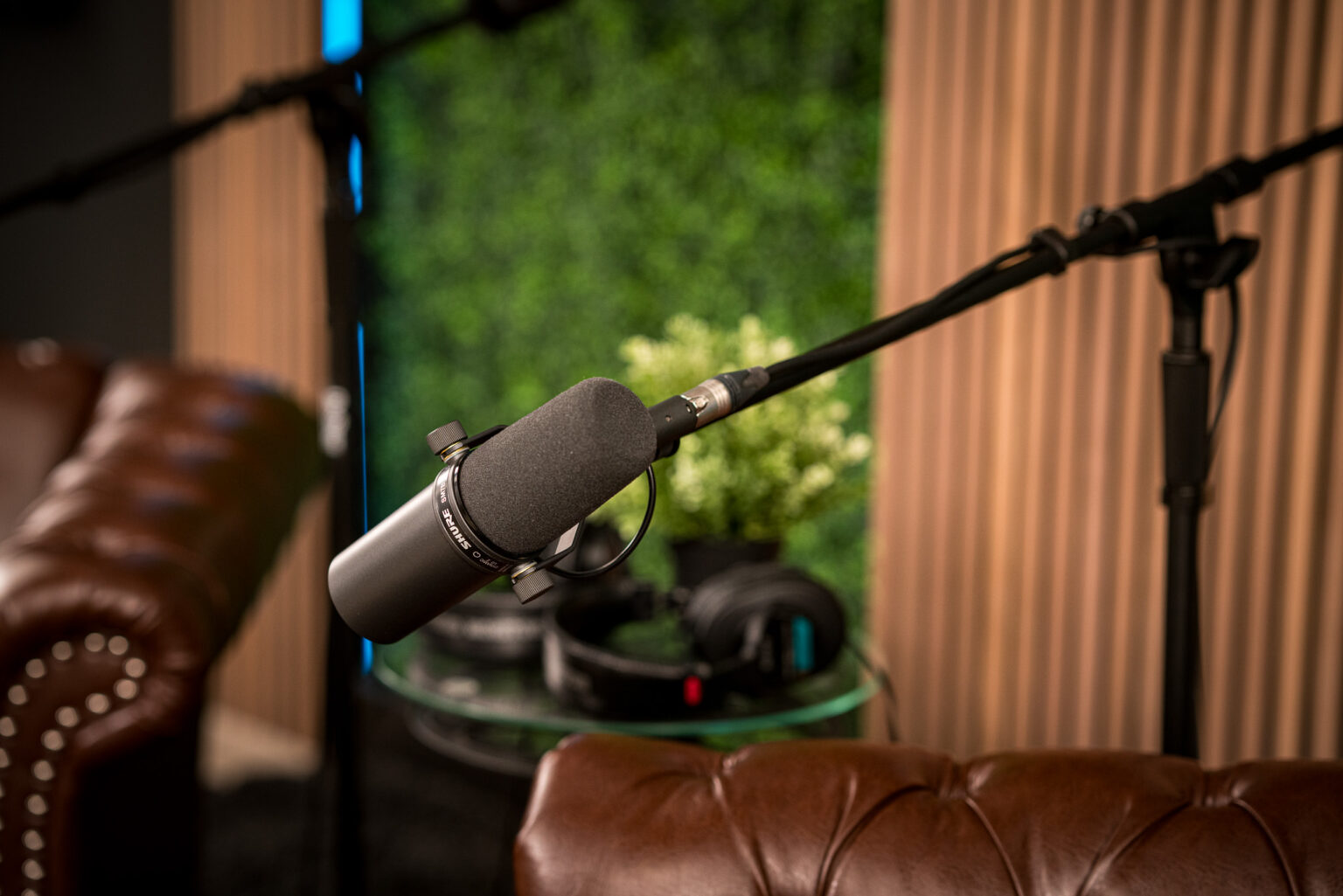
- Sound. Viewers forgive a soft picture but not bad audio. Broadcast dynamic microphones close to each speaker beat any camera microphone.
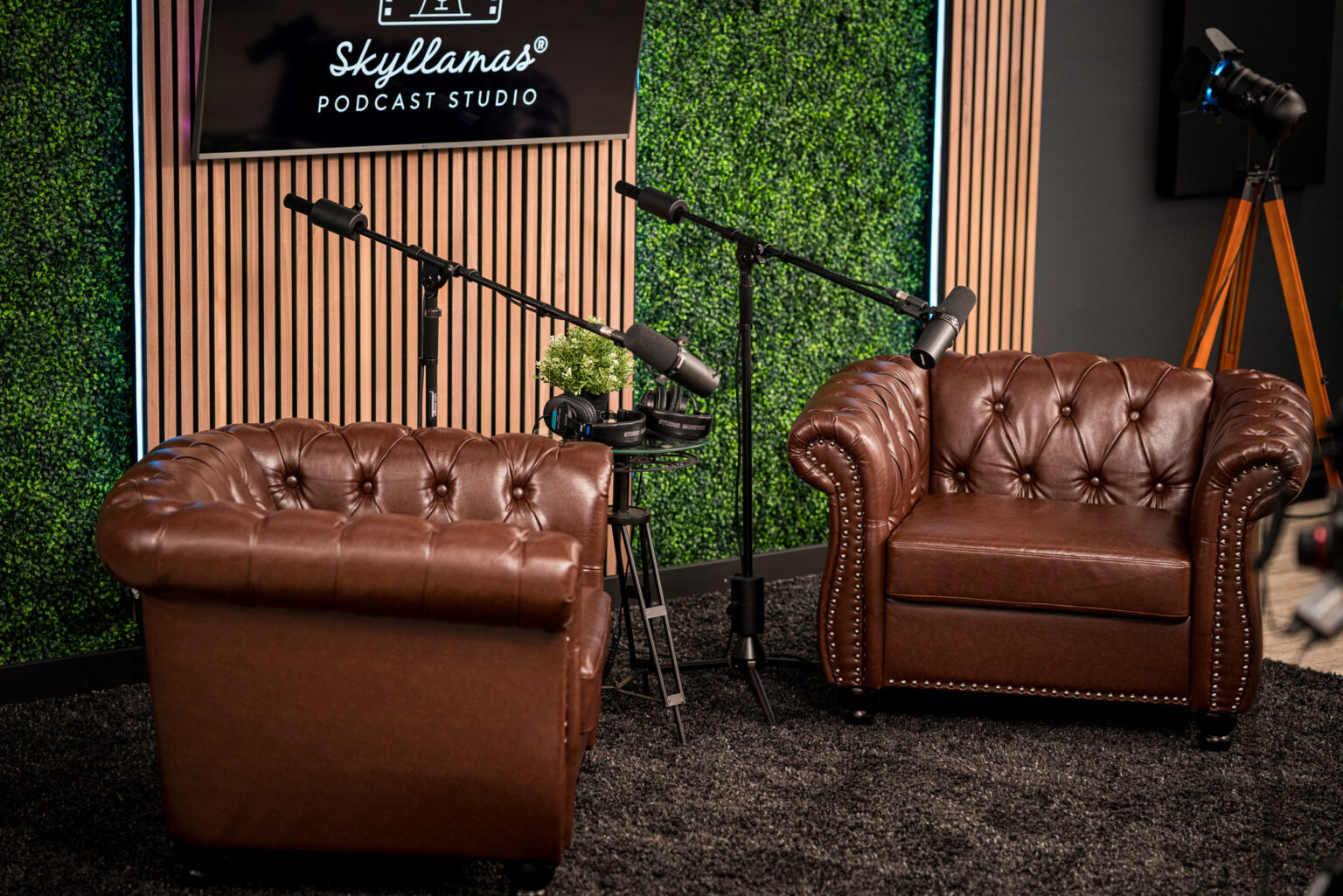
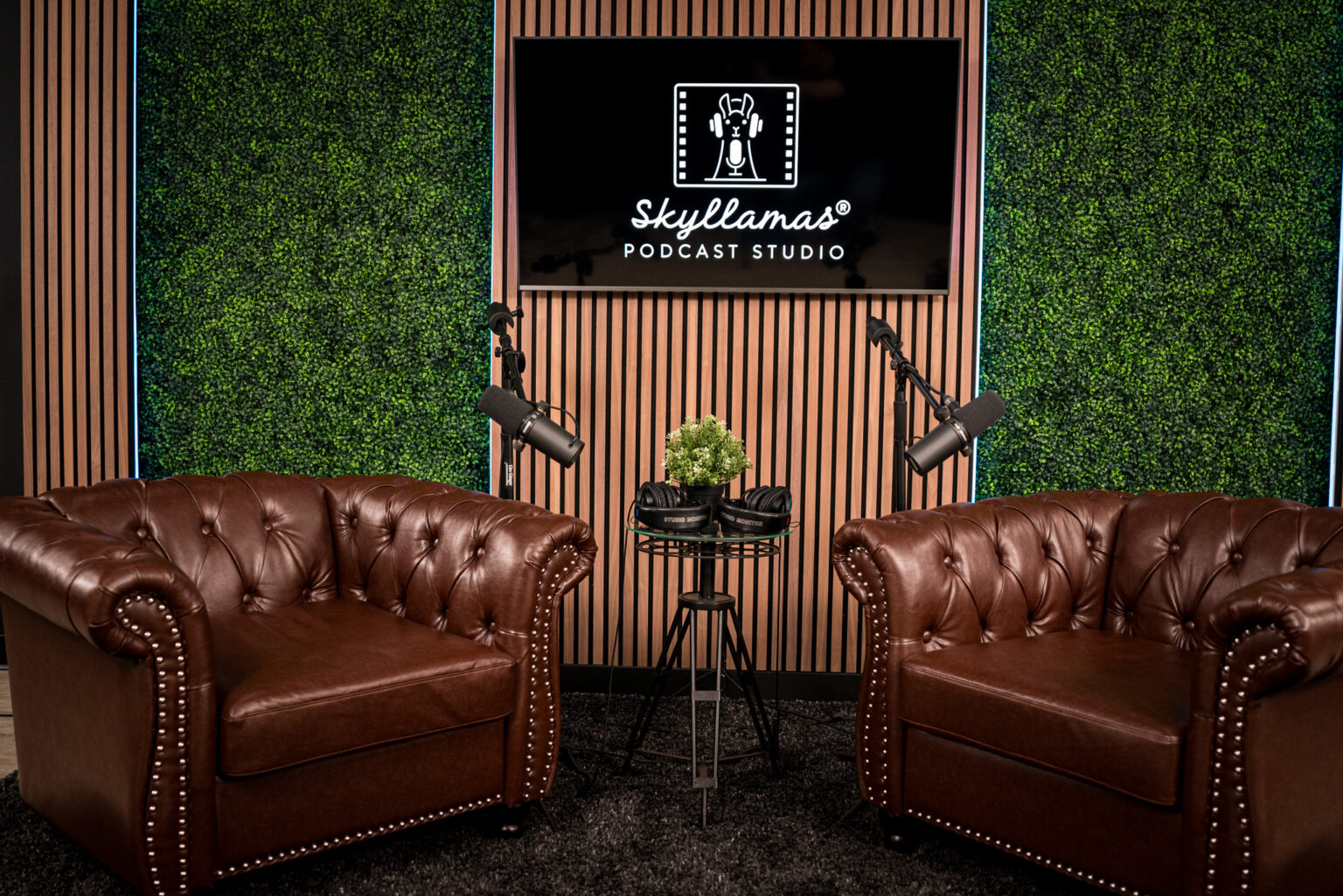
- The set. A background with depth, plants and your branding looks like a show, not a call.
Our setup
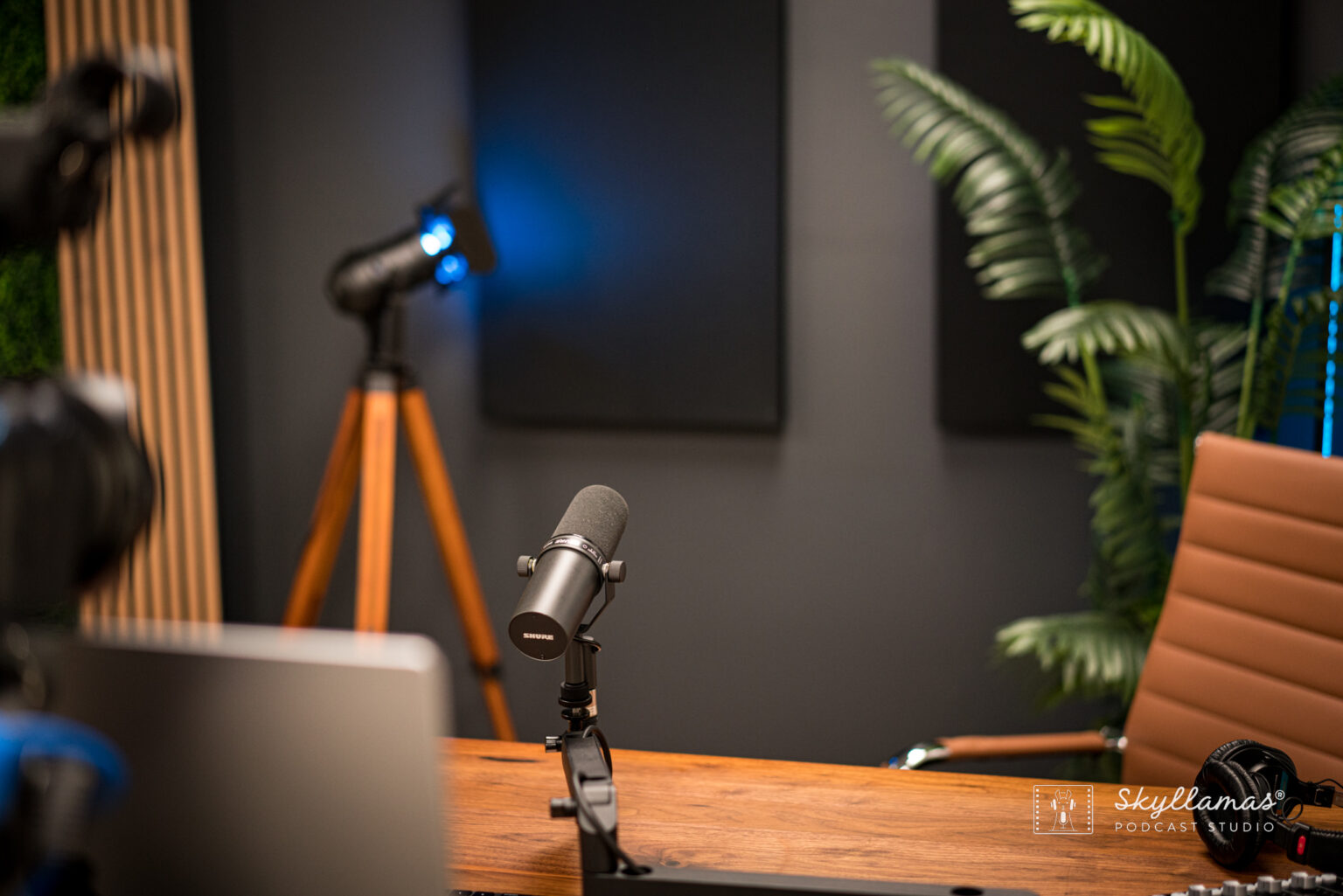
Skyllamas Podcast Studio records on up to three Sony FX30 cinema cameras with live switching, professional lighting and Shure SM7B microphones, in an acoustically treated studio in Totowa, NJ. See it on a free studio tour or in our gallery.
Questions we hear
Is one camera enough for a podcast?
For a solo show, yes. With two or more people, extra cameras let viewers see each face and make editing easier.
What is live switching?
A technician cuts between cameras during the recording, so a finished multi-camera episode is ready right after the session.
Do more cameras mean better Shorts?
Close camera shots crop cleanly to vertical, so they make better Shorts than a single wide shot.